
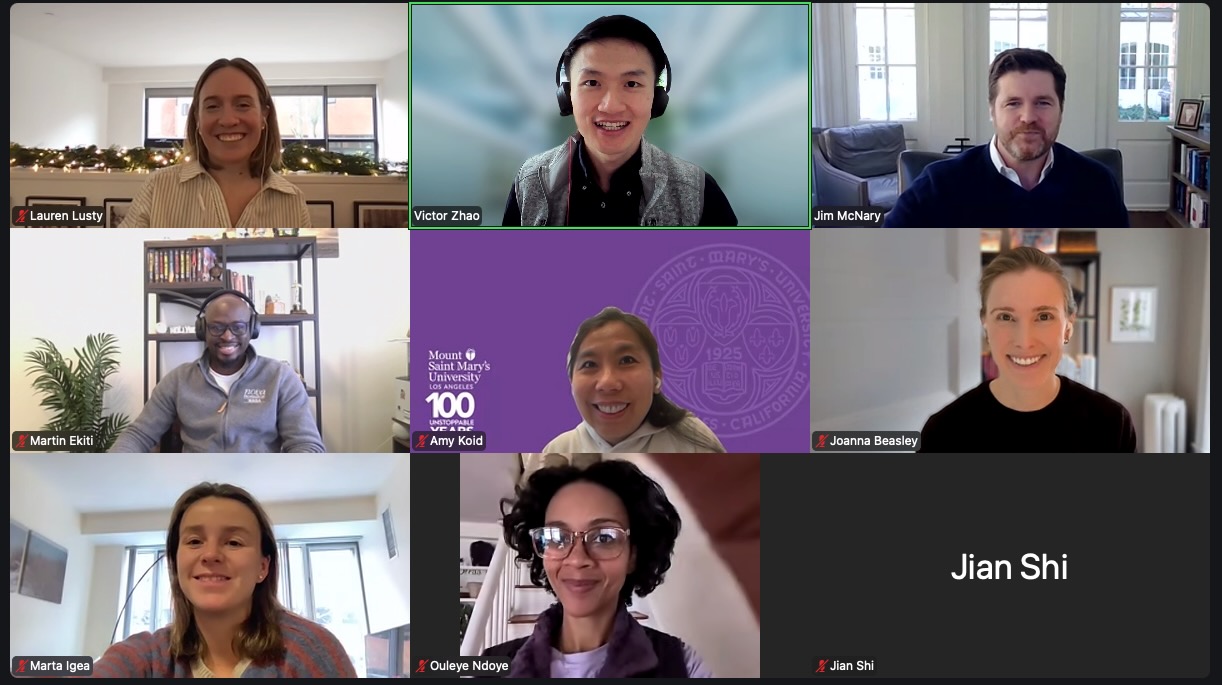
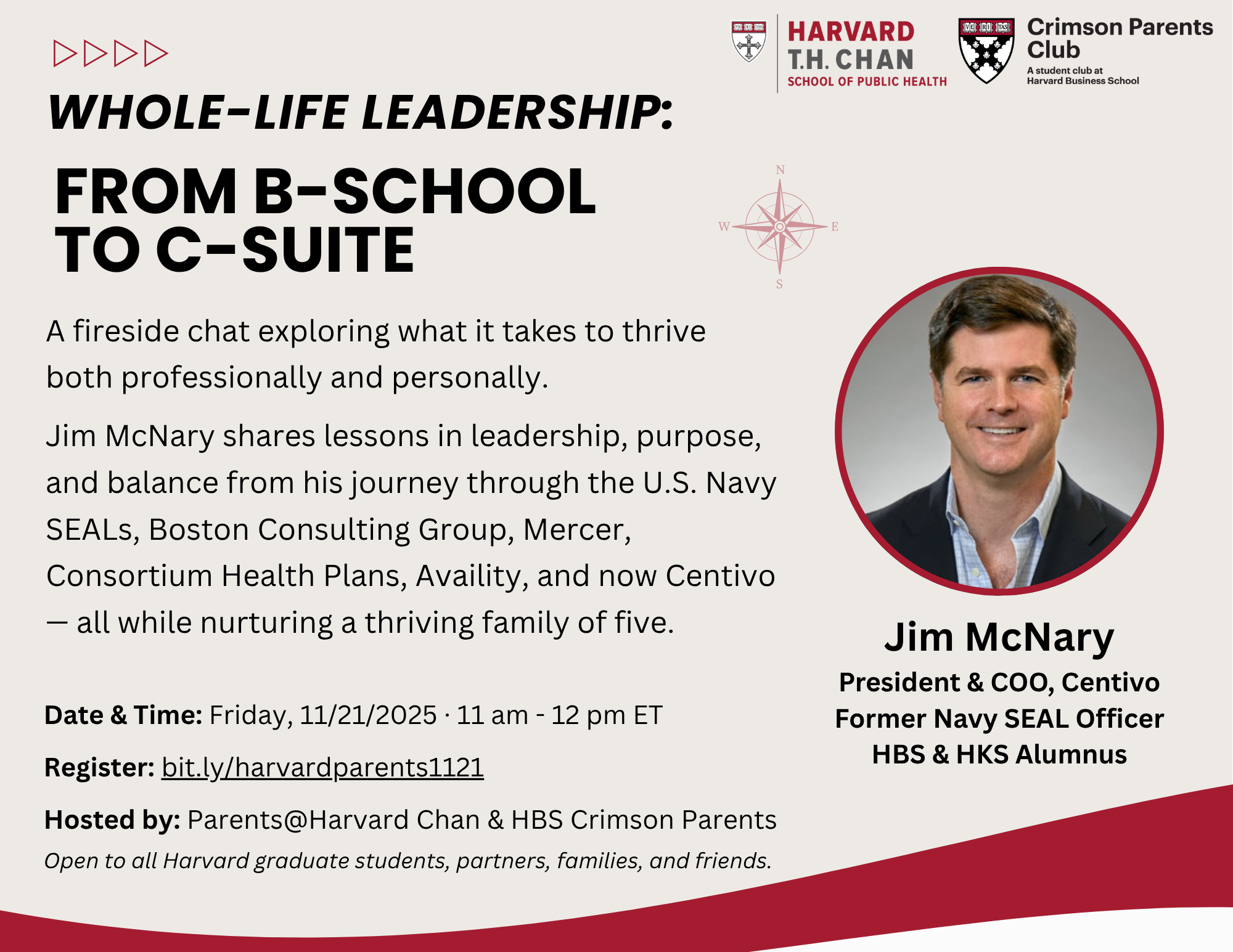
Last fall, shortly after beginning my MPH in Epidemiology at Harvard T.H. Chan School of Public Health, I stepped into a co-president role with the Parents Club and launched a speaker series called Whole-Life Leadership.
The goal was to explore one deceptively simple question:
What are the pivotal mindsets, habits, and tools needed to succeed—both at work and at home?
As we head into our next Whole-Life Leadership conversation tomorrow (details below), I’ve been reflecting on how this series began—and why the first conversation has stayed with me.
Back in November, we launched the series with a fireside chat featuring Jim McNary—President & COO of Centivo, former U.S. Navy SEAL officer, Harvard alum, and father of five.
The guiding question that night was simple, but demanding:
What does it actually take to lead well at work and at home—at the same time?
Several months later, Jim’s insights feel even more relevant. Here are the three ideas I’m still thinking about—and why they’ve endured.
- 1. Leadership Is About Taking Care of People—Not Just Performance
- 2. People Want to Be Led Well—and That Starts With the Leader
- 3. Don’t Impose—Expose: Let Your Kids Become Themselves
- Why This Conversation Still Matters
- Up Next: Leading Through Identity Shifts with Erica Chen (Fri, 2/6)
1. Leadership Is About Taking Care of People—Not Just Performance
Jim shared a line that immediately reframed leadership for many of us:
“You’re only as well as your sickest kid.”
At some point, he explained, leaders realize what’s truly core. Professional work still matters—but it’s no longer about “achieve this.”
The deeper question becomes:
How does this work support my life with my wife and kids—in a holistic way?
In the military, Jim learned that leadership isn’t about command; it’s about taking care of your people so they can perform. That principle doesn’t disappear when the setting shifts from a command post to a kitchen table.
At home, this mindset shows up as:
- Not over-indexing on performance the way we often do at work
- Letting children be who they are, not who we want them to be
- Zooming out and easing pressure on things that won’t matter long-term
Whole-Life Leadership Insight
👉 Professional excellence loses meaning if it comes at the expense of the people we love.
2. People Want to Be Led Well—and That Starts With the Leader
One of the most resonant moments came when Jim reflected on one of his former bosses, Admiral William H. McRaven (author of the #1 New York Times bestseller, Make Your Bed: Little Things That Can Change Your Life…And Maybe the World).
In SEAL teams, officers were expected to finish team runs first—not to demonstrate dominance, but to show readiness and care for the group. The leadership lesson was simple:
People want to be led well. Your role is to fulfill that.
That responsibility starts with self-leadership. Jim was clear: self-care isn’t indulgent—it’s foundational.
That includes:
- Sleep
- Reflection or faith practices
- Therapy
- Time in nature
- Anything that helps you stay regulated under pressure
A leader’s emotional tone spreads quickly. Calm flows through teams and families just as readily as stress does.
Whole-Life Leadership Insight
👉 Self-care isn’t selfish—it’s part of the job.
3. Don’t Impose—Expose: Let Your Kids Become Themselves
One audience question cut straight to the heart of our community of high-achieving parents:
How do you encourage your kids to do well in life without pressuring them to follow your path—especially when you’ve had elite educational or professional success?
Jim’s answer was subtle and powerful: focus on exposure, not pressure.
Rather than steering children toward specific outcomes, he emphasized:
- Exposing them to different environments and possibilities
- Letting them observe without expectation
- Allowing interests to emerge organically
He shared examples of bringing his kids to reunions, workplaces, and experiences—not to persuade, but to inform. One of his sons ultimately chose Navy ROTC in college—not because of pressure, but because he tried it and genuinely loved it.
The goal, Jim said, isn’t to replicate ourselves. It’s to help kids create options—and trust themselves enough to choose.
Whole-Life Leadership Insight
👉 Great leaders don’t manufacture outcomes. They create environments where others can choose well.
Why This Conversation Still Matters
What made this conversation endure wasn’t tactics or hacks—it was perspective rooted in lived experience.
Healthcare is hard. Parenting is hard. Leadership is hard.
What sustains us isn’t optimization—it’s alignment.
That’s the intention behind Whole-Life Leadership: conversations that age well because they’re grounded in reality, not trends.
And that brings us to tomorrow.
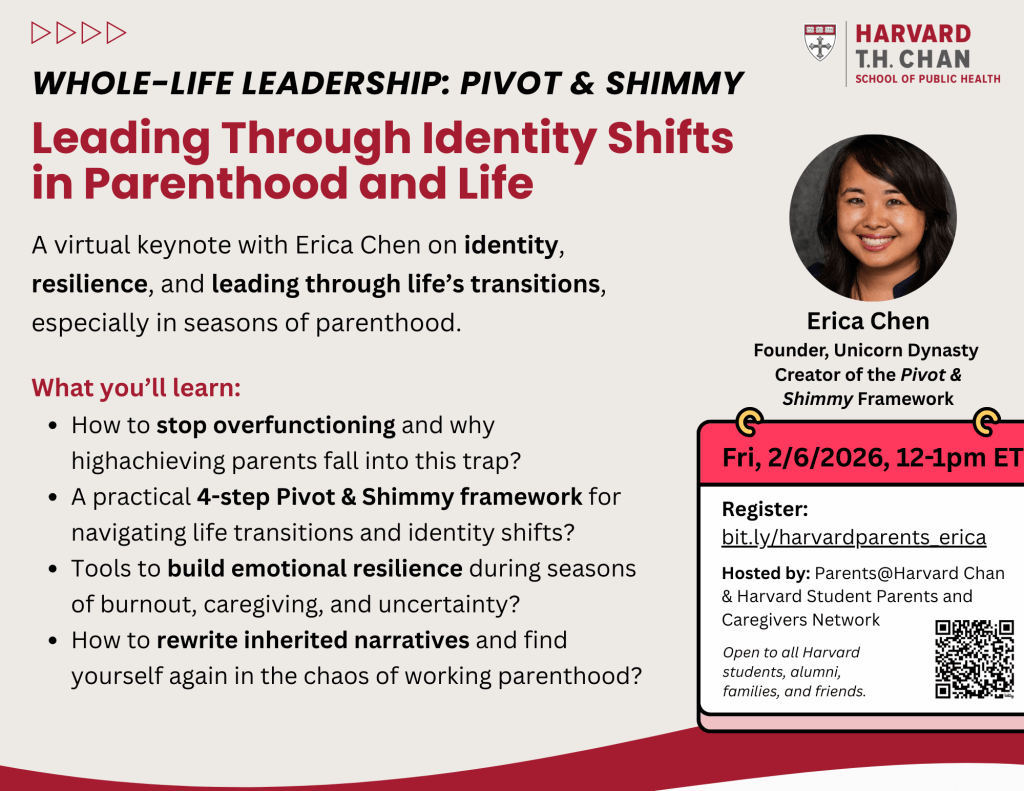
Up Next: Leading Through Identity Shifts with Erica Chen (Fri, 2/6)
Our next conversation builds directly on these themes—through a different lens.
Tomorrow, February 6, we’ll be joined by Erica Chen, founder of Unicorn Dynasty and creator of the Pivot & Shimmy framework, to explore:
- Why high-achieving parents and professionals often fall into over-functioning
- A practical four-step framework for navigating identity shifts and life transitions
- Tools for building emotional resilience during seasons of burnout, caregiving, and uncertainty
- How to rewrite inherited narratives and reconnect with what matters most
If Jim helped us rethink how we lead across work and home, Erica will challenge us to examine who we’re becoming—and how we pivot with intention.
📅 Whole-Life Leadership: Pivot & Shimmy
🗓 February 6
👥 Open to Harvard students, alumni, family, and friends
Register here: https://bit.ly/harvardparents_erica

 WeZBest